Why this island matters
For more than two hundred years, whoever held this island controlled trade on the River Gambia: first gold and ivory, then enslaved people. The fort on the island, the trading posts on the bank and the guns at the river mouth together tell the story of the Atlantic slave trade from its beginnings to its end. UNESCO lists seven places as one World Heritage Site: the island, the Six-Gun Battery and Fort Bullen at the river mouth, the ruins of San Domingo, the remains of the Portuguese chapel and the CFAO building in Albreda, and the Maurel Frères building.
The Roots story
In 1976 the American writer Alex Haley published Roots: The Saga of an American Family. It follows Kunta Kinte, a young Mandinka man from Juffureh, who is captured, held and shipped across the Atlantic to be enslaved in America, and the generations of his family that followed. The book and the television series made from it brought Juffureh worldwide fame, and people from across the African diaspora still come here to find their roots.
Historians still debate how much of Haley's family story can be proven. What is not in doubt is the trade itself, and this river's place in it. In 2011, during the International Roots Festival, the island was given a Gambian name in Kunta Kinte's memory.
The island through time
- 15th centuryPortuguese traders settle at San Domingo, on the north bank opposite the island. It later gives the island its fresh water.
- 1651Settlers from the Duchy of Courland (in today's Latvia) acquire the island from the rulers of Niumi and start building the first fort.
- 1659–1661The Dutch hold the fort briefly; the British capture it in 1661 and rename island and fort after James, Duke of York.
- 1681Albreda, on the bank opposite, is rented to French traders and becomes the French trading post on the river.
- 1695–1702The French take Fort James after a battle; by 1702 it is back in English hands.
- 1807Britain passes the Abolition Act, ending its slave trade.
- 1816 and 1826The Six-Gun Battery and Fort Bullen are built at the river mouth to stop slave ships from using the river.
- 1870The island and the river-mouth forts are abandoned. The island has been in ruins since.
- 1976Alex Haley publishes Roots: The Saga of an American Family, tracing his family to Juffureh.
- 1996The old Maurel Frères trading house is restored and opened as a small museum on the Atlantic slave trade.
- 2003UNESCO inscribes the island and its related sites as a World Heritage Site.
- 6 February 2011James Island is renamed Kunta Kinteh Island during the International Roots Festival.
What you'll see
The island and Fort James
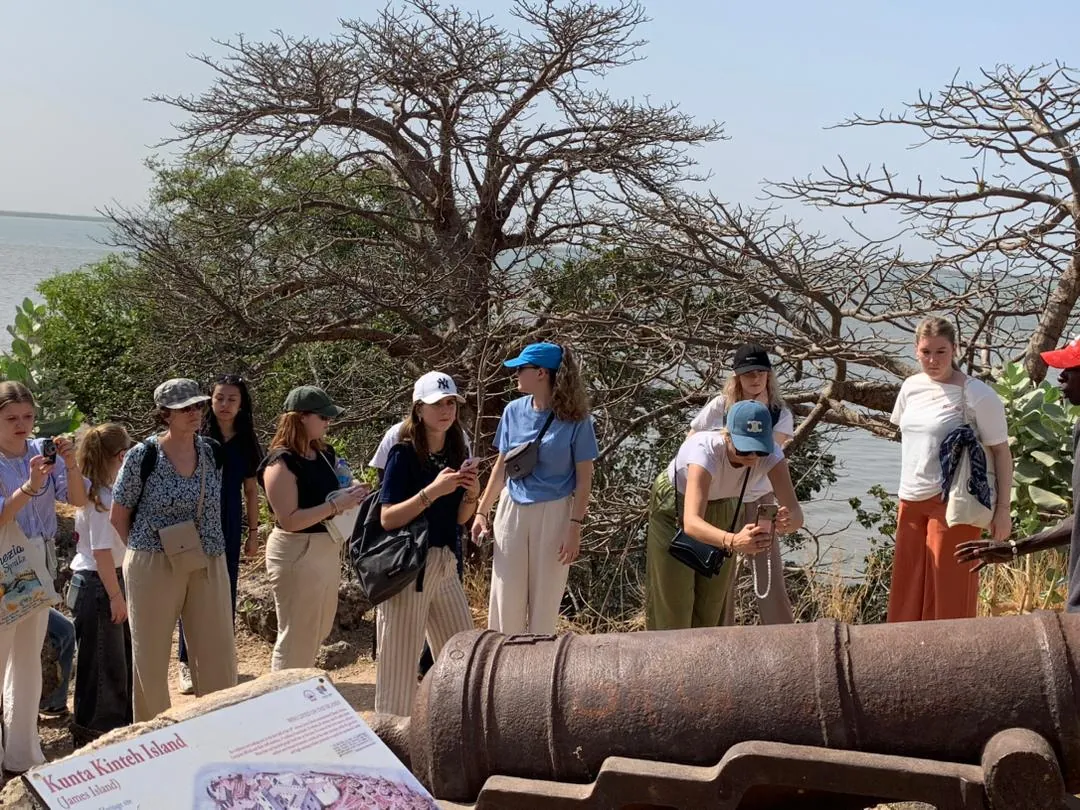
A small rocky island in the middle of the river, with the ruins of Fort James among a few baobab trees. Erosion has taken most of it: it is now only a fraction of its size when the fort was in use.
Albreda
The former French trading post. Look for the remains of the Portuguese chapel, the restored CFAO trading building, and the flagpole that, local lore says, freed any enslaved person who managed to touch it.
The museum of the slave trade
A small, thought-provoking museum in the old Maurel Frères trading house, with a section on the Roots story.
Juffureh
The Mandinka village of the Roots story, next to Albreda. Members of the Kinteh family welcome visitors to the family compound.
San Domingo
The ruins of the earliest Portuguese settlement on this stretch of river, just east of Juffureh.
Visiting from Jerreh Camp
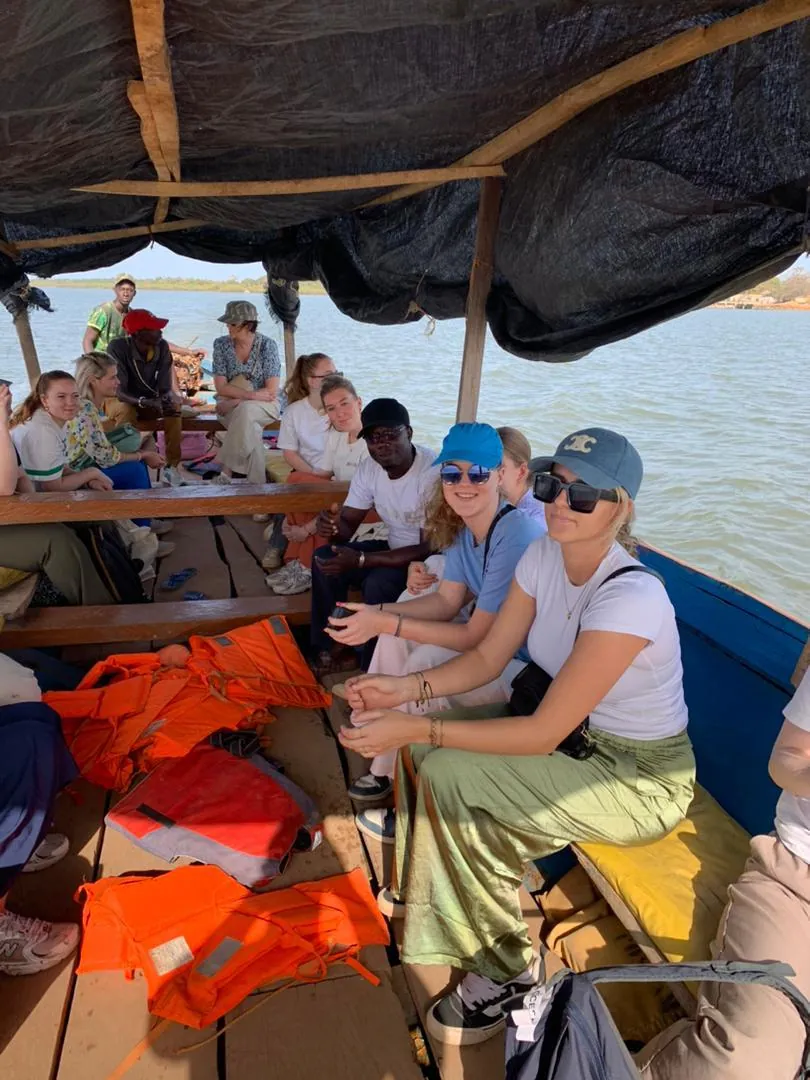
Kunta Kinteh Island is one of the closest great sights to the lodge. From Sittanunku it is a short drive to Albreda and Juffureh, then a boat ride of about 3 km out to the island. There is no ferry to wait for, so you can leave after breakfast and be back for a late lunch on the beach.
We help with the driver, a local guide who knows the villages, and the boat. Tell us how long you want to spend in Juffureh and Albreda, and whether to add Fort Bullen at Barra on the way back.
Good to know
- Wear shoes with a good grip: the island is a small rocky outcrop.
- Bring a hat, water and sun cream for the boat and the island.
- Carry cash for the entry tickets, the museum and the boat.
- Many visitors come here to remember their ancestors. Take your time, and ask before photographing people.
Questions people ask
Is Kunta Kinteh Island the same as James Island?
Yes. The island was called St Andrew's Island, then James Island after the British took it in 1661. It was renamed Kunta Kinteh Island on 6 February 2011, during the International Roots Festival.
How far is Kunta Kinteh Island from Jerreh Camp Lodge?
About 15 km. Both are on the North Bank, so you don't need the Banjul–Barra ferry. You drive to Albreda or Juffureh, then take a short boat ride out to the island.
How long does the visit take?
Plan a half day from the lodge for the villages and the island, or a full day if you want to take your time in Juffureh and Albreda, or add Fort Bullen at Barra.
Is Roots a true story?
Alex Haley wrote Roots as the story of his own family, tracing it back to Juffureh. Historians still debate how much of it can be documented, but the slave trade it describes, and this island's part in it, are well recorded.
Can we visit Fort Bullen on the same day?
Yes. Fort Bullen and the Six-Gun Battery are part of the same World Heritage Site, at the river mouth near Barra. We can add them to the day, or you can see them on our Barra and north coast day.
How do I book a visit?
Call or WhatsApp the lodge on +220 271 8194, or send a booking request and write "Roots and the river" in the notes. We help with the driver, a local guide and the boat.
More days out from the lodge
Kunta Kinteh Island pairs well with our Barra and north coast day for Fort Bullen and the Six-Gun Battery, the other half of the World Heritage Site. See all our days out.
Sources
- UNESCO World Heritage List: Kunta Kinteh Island and Related Sites
- UNESCO / ICOMOS evaluation of the site (2003)
- UNESCO nomination file, with the site coordinates
- World Heritage Site: history and name change
- Wikipedia: Kunta Kinteh Island
- My Gambia: Kunta Kinteh Island
- My Gambia: Kunta Kinteh and Albreda
- J. M. Rahier: Roots heritage tourism in Juffureh and Kunta Kinteh Island (FIU)